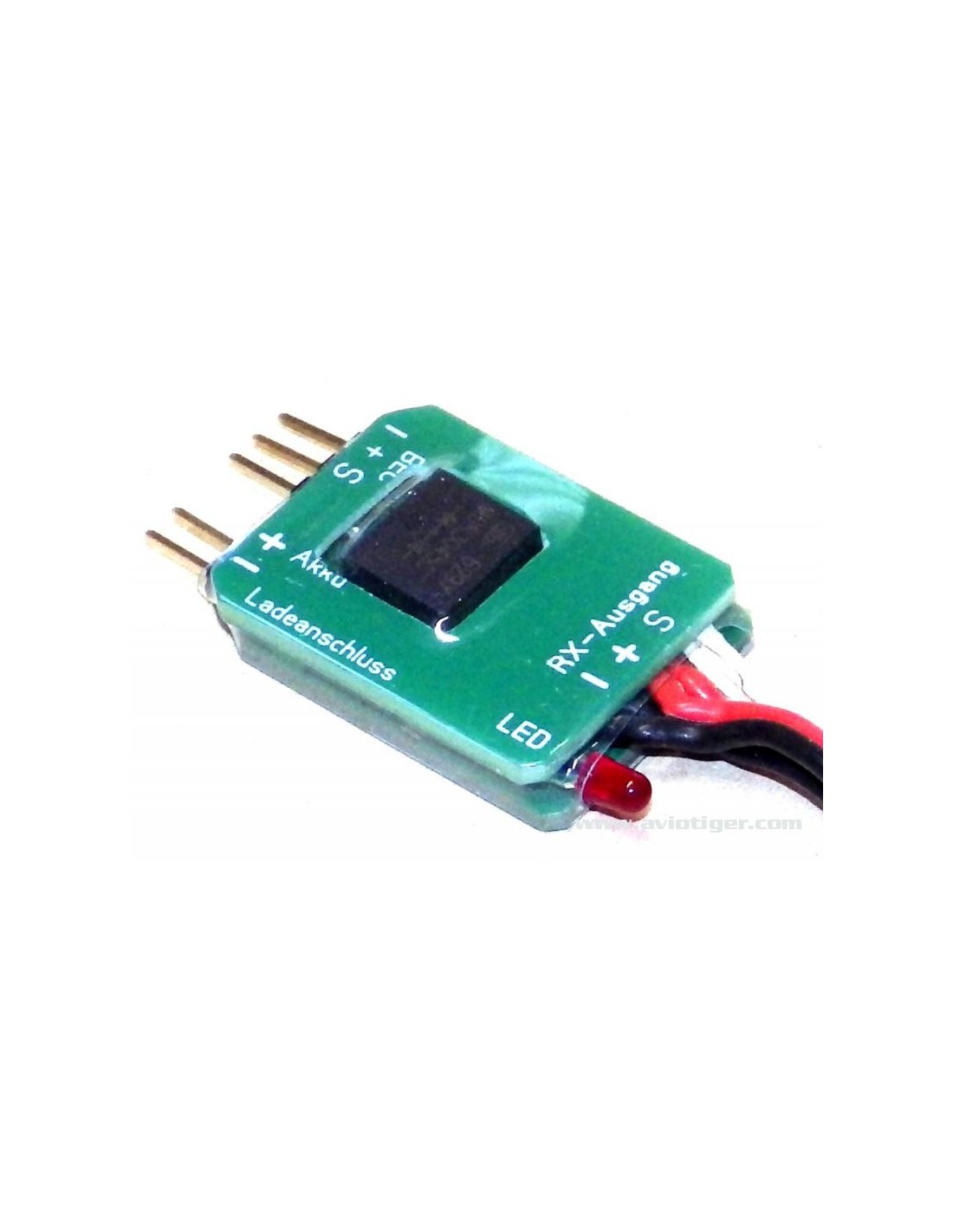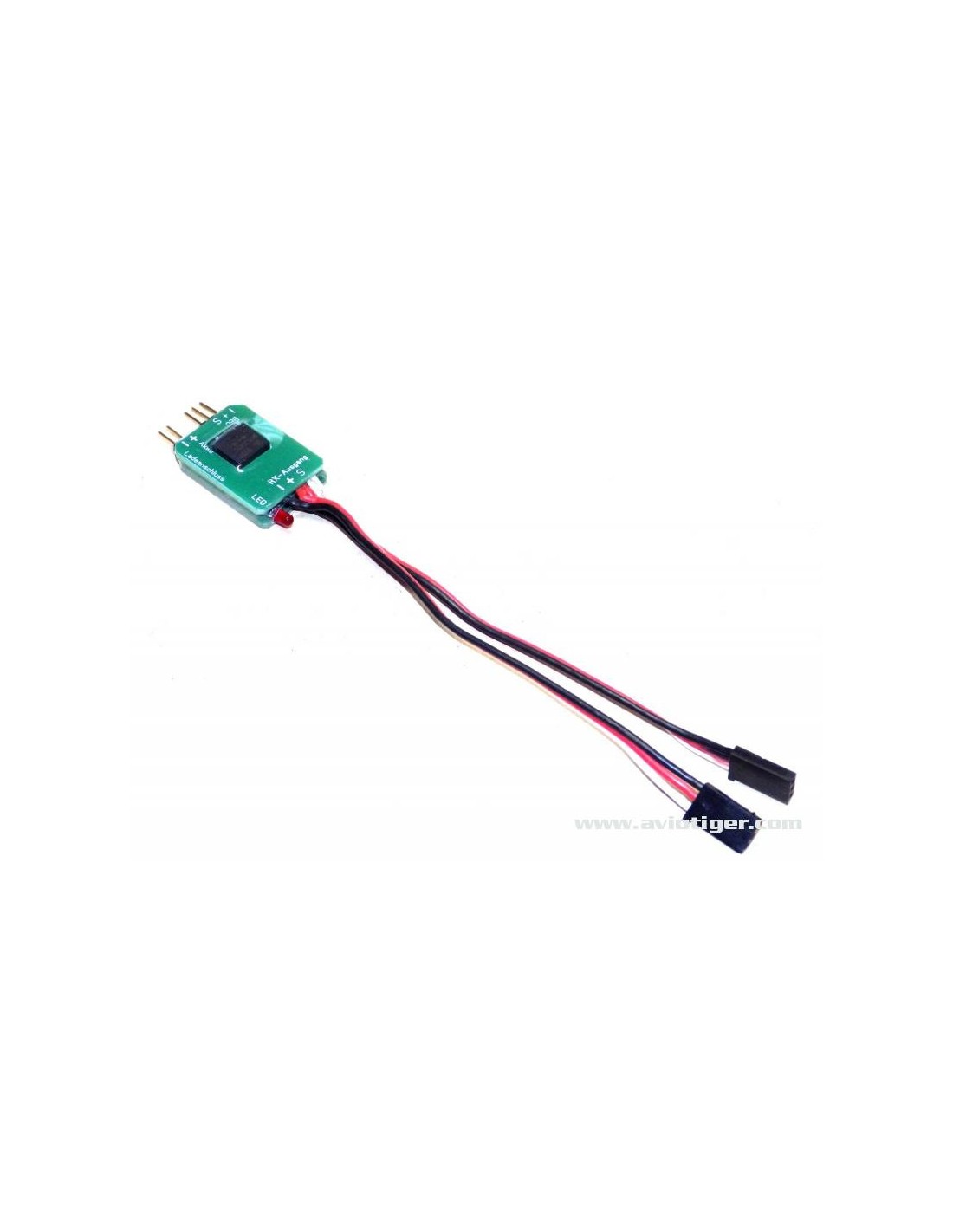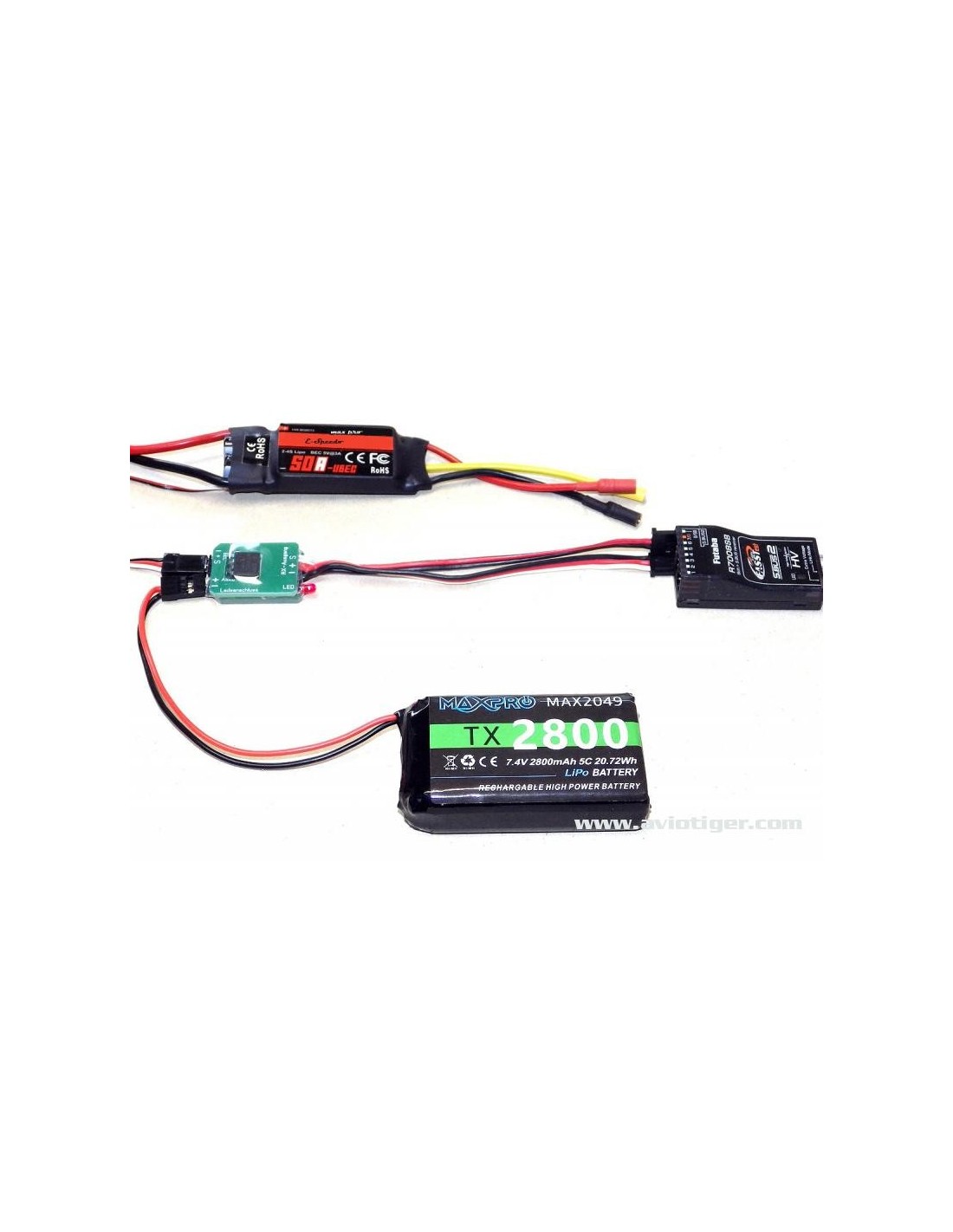
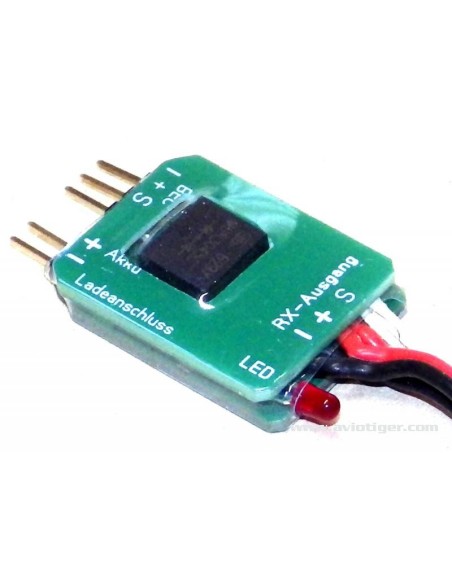
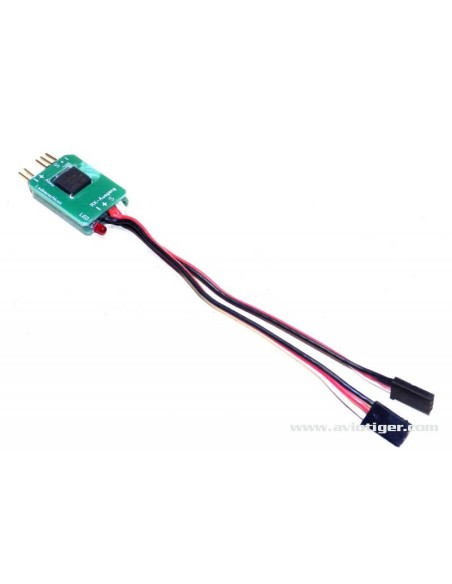
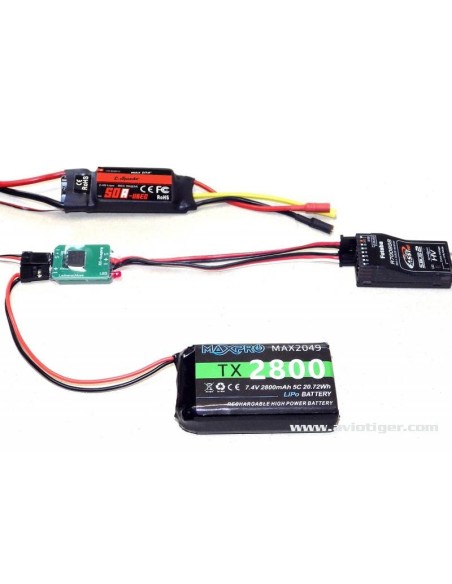
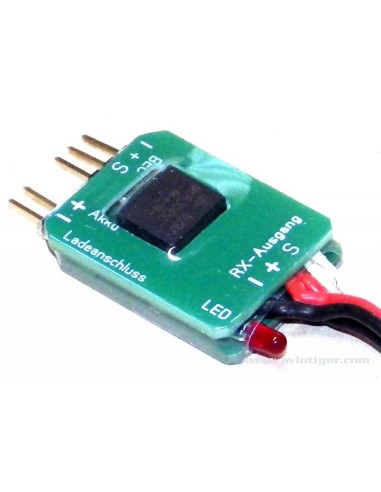
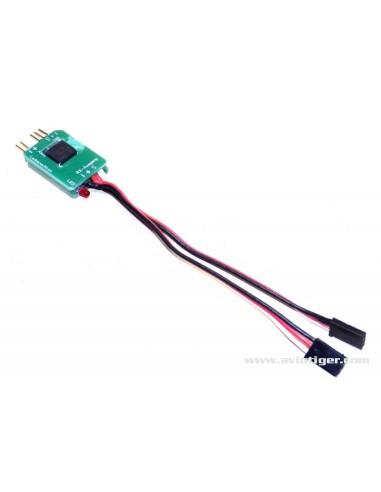
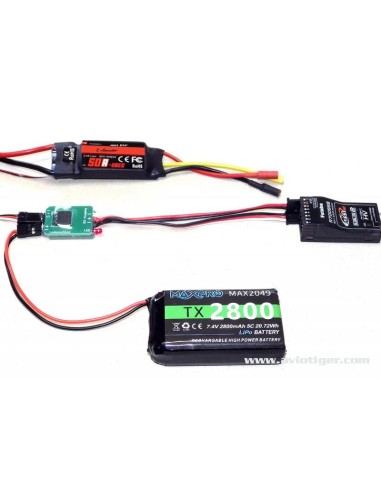

The BEC 20A battery switch is used to protect the receiver's power supply when using a controller with a BEC function.
If the controller's BEC power supply drops out briefly, or even ceases to operate, the receiver and servos are powered by the connected battery. Without such BEC protection, failure of the BEC function in the controller would result in total failure of the entire receiver system.
Normally, the BEC 20A battery switch switches the battery in parallel with the controller's BEC. Current is then always drawn from the current source with the highest voltage!
If the main current is to be drawn from the BEC controller, only the BEC voltage needs to be higher than the voltage of the connected battery. Since the voltage can generally be set in today's BECs, the choice of possible batteries is easy. For regulators without an adjustable BEC regulator voltage, a corresponding battery with a voltage lower than the BEC voltage should be used.
If, on the other hand, the main energy is to be drawn from the connected battery (which should be sized accordingly), and the BEC controller is only used to protect the battery, the receiver battery used should have a voltage higher than that of the BEC controller. In this case, the battery is protected against failure by the BEC function. In this case, the battery must have sufficient capacity for the model's overall power supply, as it provides the total energy for the receiver system and servos.
When using a 4-cell NiMH battery (approx. 5 to 5.5 V), the controller's BEC should be set to 6 V. For LiFe batteries to 6.5 V and for LiPo (2-cell) batteries to at least 8 V.
Technical specifications:
Voltage range: 4.8-8.4 V
Power rating: 20 A continuous current (30 A briefly)
Weight: 16.5 g
Dimensions: 30x22x7 mm
2x connection for receiver
1x connection for BEC controller
1x connection for battery
Features :
BEC 20A battery switch
Receiver power protection
2 possible operating modes:
BEC controller protection with back-up battery
Receiver battery protection via BEC controller
2x receiver connection
BEC controller connection
Battery connection
If the controller's BEC power supply drops out briefly, or even ceases to operate, the receiver and servos are powered by the connected battery. Without such BEC protection, failure of the BEC function in the controller would result in total failure of the entire receiver system.
Normally, the BEC 20A battery switch switches the battery in parallel with the controller's BEC. Current is then always drawn from the current source with the highest voltage!
If the main current is to be drawn from the BEC controller, only the BEC voltage needs to be higher than the voltage of the connected battery. Since the voltage can generally be set in today's BECs, the choice of possible batteries is easy. For regulators without an adjustable BEC regulator voltage, a corresponding battery with a voltage lower than the BEC voltage should be used.
If, on the other hand, the main energy is to be drawn from the connected battery (which should be sized accordingly), and the BEC controller is only used to protect the battery, the receiver battery used should have a voltage higher than that of the BEC controller. In this case, the battery is protected against failure by the BEC function. In this case, the battery must have sufficient capacity for the model's overall power supply, as it provides the total energy for the receiver system and servos.
When using a 4-cell NiMH battery (approx. 5 to 5.5 V), the controller's BEC should be set to 6 V. For LiFe batteries to 6.5 V and for LiPo (2-cell) batteries to at least 8 V.
Technical specifications:
Voltage range: 4.8-8.4 V
Power rating: 20 A continuous current (30 A briefly)
Weight: 16.5 g
Dimensions: 30x22x7 mm
2x connection for receiver
1x connection for BEC controller
1x connection for battery
Features :
BEC 20A battery switch
Receiver power protection
2 possible operating modes:
BEC controller protection with back-up battery
Receiver battery protection via BEC controller
2x receiver connection
BEC controller connection
Battery connection